The Ecole Des Beaux-Arts
Drawn and Recounted by a student.
What was it like to study at the École des Beaux-Arts?
This question arises in the mind of every student of figurative art or classical architecture today. More and more, students are lured to atelier-style educational opportunities with the promise of receiving ‘Old Master’ training. For some, this implies the mastery of the Florentine Renaissance, but for many, the notion of Old Master training evokes the world-renowned École des Beaux-Arts de Paris in the 19th century.
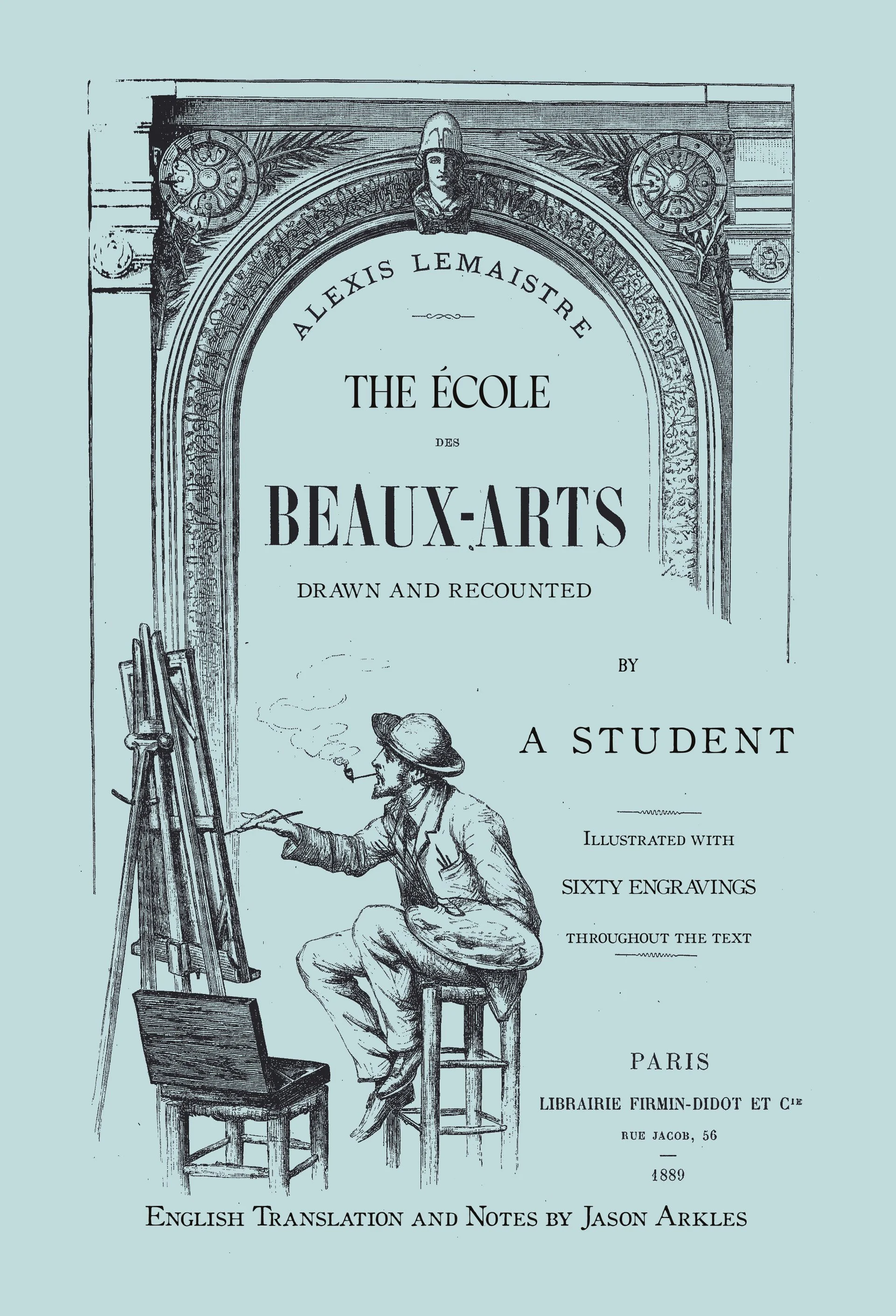
But that notion is generally a foggy one, in the mind of the student (and often of the instructor). Fortunately, there exists a delightful and informative resource - Alexis Lemaistre’s L'École des Beaux-Arts Dessinée et Racontée par un Élève, or The École des Beaux-Arts, drawn and recounted by a student. Lemaistre attended the Ecole des Beaux-Arts de Paris in the early 1870s and first exhibited in the Paris Salon of 1873. He found success as an illustrator, but his lasting contribution to art is his memoir published in 1889. It has long been a vital primary source for art historians, but in the face of rising interest in art education, the valuable insight contained in this memoir deserves to be presented in English for the very first time and put in the hands of artists and students once more.
So what was the Ecole des Beaux-Arts really like? How many hours a day did one study? Exactly what sorts of classes were offered? How did one get in? How did one advance? What were the steps towards winning the Prix de Rome? What were the competitions like? What were the ateliers like? Lemaistre paints a meticulous and vibrant picture of student life, from atelier hazing rituals to the sequence of competitions leading to the Prix de Rome; from how models were utilized to how one obtained their library card. The minutiae and anecdotes found in this account are as intriguing to today’s student as any question of historical method.
Additionally, Lemaistre includes the Constitution of the Ecole des Beaux-Arts, which spells out the complete structure of the school – faculty and staff, curriculum, committees and juries; and also included is a copy of the school regulations the students received, detailing classes, competitions, awards, punishments, advancements, and much more. Truly, this is a must-read book for anyone managing or teaching in the realm of traditional art education.